
Every summer, as temperatures regularly exceed 40°C, Dubai faces a question that few other cities need to consider: should employees really be working five full days a week in such extreme heat?
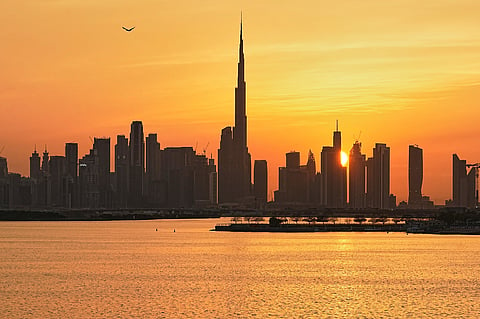
Over the past two summers, the Dubai Government Human Resources Department has responded by introducing flexible working hours for government staff. With July approaching and no official announcement yet for 2026, attention is turning to whether the measure will return.
How Dubai Introduced Reduced Summer Working Hours
In summer 2024, the department launched a pilot initiative called “Our Summer is Flexible” across 15 government entities. Workers were divided into two groups. One group compressed their hours into four days and took Fridays off. The other worked shorter daily hours across the full week.
Results from the pilot phase were positive. According to assessments under the Dubai Government Excellence Programme, the pilot recorded an 87% improvement in employees’ ability to complete tasks on time, a 96% improvement in customer service with zero complaints filed, and a 98% improvement in employee satisfaction.
In 2025, the department expanded the initiative, rebranded as “Our Flexible Summer,” to all Dubai government entities, running from July 1 to September 12. The initiative was linked to the UAE’s Year of Community and the goal of supporting families during school holidays. The two-group model remained. One cohort worked eight-hour days from Monday to Thursday with Fridays off, while the other worked seven-hour days Monday to Thursday plus a half-day on Friday.
The UAE’s Midday Work Restriction
The flexible hours scheme operates alongside a separate layer of summer protection that has been in place for outdoor workers for more than two decades. The UAE’s annual midday work restriction, now in its 22nd consecutive year, prohibits outdoor work under direct sunlight between 12:30 pm and 3:00 pm from June 15 to September 15.
Enforced by the Ministry of Human Resources and Emiratisation, the restriction covers construction sites, infrastructure projects, and open-air work during the hottest part of the day, when temperatures can reach 45–50°C. Employers who violate the rule face fines of 5,000 dirhams per worker, up to a maximum of 50,000 dirhams.
Will Dubai’s Flexible Summer Work Scheme Return in 2026?
A pilot in 2024. A full rollout in 2025. The broader trend of flexible work in the UAE points in one direction. The federal government moved to a four-and-a-half-day week in January 2022. Sharjah made a full four-day week permanent. A government white paper published in early 2025 made the case for remote and hybrid working models across the UAE.
The “Our Flexible Summer” initiative is also tied to the Dubai Quality of Life Strategy 2033. And 2026 has been designated as the UAE’s Year of the Family. Government employees with children will likely expect the same arrangements they have had for the past two summers.
Whether the programme returns in 2026 for Dubai government employees remains to be seen. However, its expansion over the past two years suggests that flexible working arrangements continue to play an important role in Dubai’s approach to employee wellbeing and quality of life.
 Watch AD


